Japanese
 English
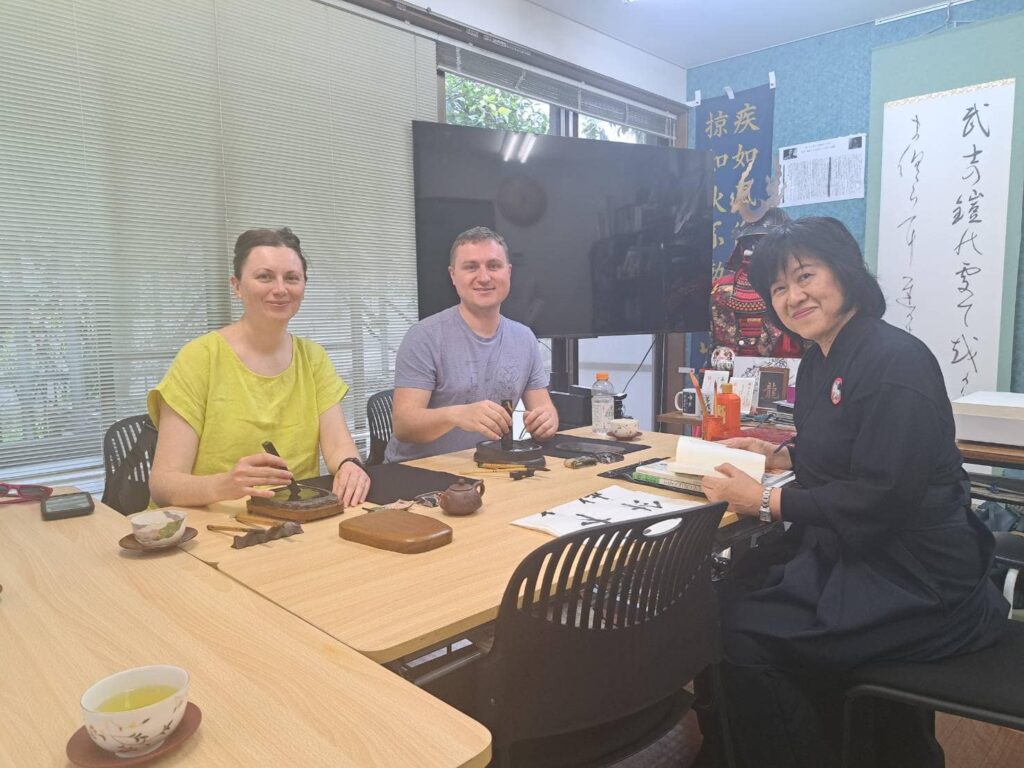
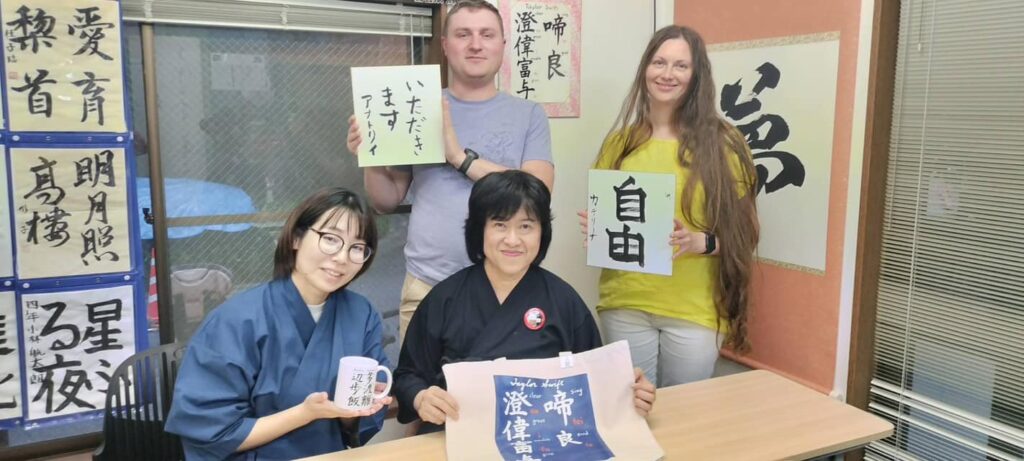
A Ukrainian couple who moved to the U.S.A. before the war with Russia came to experience calligraphy.
Before their lesson, they visited Edo Tokyo Open-air Architectural Museum in Koganei park as I recommended.
Anatolii wrote いただきます(Itadakimasu), which Japanese people say before they eat to express their thanks for the food either to themselves alone or to the people who prepared it.
Katheryna wrote 自由 (Jiyu), or ‘Freedom’.
They enjoyed matcha along with beautiful Japanese sweets. They already enjoyed matcha before they came to Japan, but it was their first time to learn that the ‘front’ of the bowl is considered important, and that we should avoid drinking from it.
They were interested in how hiragana and katakana were invented by Japanese people.
They were surprised when I told them that Japanese speakers can communicate with Chinese speaker through kanji.
10月22日に、アメリカにロシアとの戦争よりも前に移住なさっていたウクライナ人ご夫婦が書道体験にいらっしゃいました。
ご両親はウクライナで、皆様ご健在ですが、明日どうなるかわからないとおっしゃっていました。
私がお勧めしたので、午前中に小金井公園の江戸東京たてもの園にいらしたそうです。
アナトリィさんは「いただきます」、カテリーナさんは「自由」と書かれました。
ジャコランタンの練り切りがあったので、和洋折衷型の和菓子を喜んでいらっしゃいました。
お抹茶は以前から飲んでいらっしゃいましたが、お茶碗に正面があって、それを避けて飲む必要があると言うことを初めて知って嬉しかったとおっしゃっていました。
漢字とひらがなとカタカナについて詳しく説明を求められ、仏教の教典の中国語には助詞が無い為、助詞と送り仮名としてカタカナが作られたと高校の漢文で習ったことをお伝えしました。
日本人は中国人と筆談できるとお伝えしたら、そういった事はヨーロッパではないとびっくりなさっていました。